
Introduction
A founder opens the online Trademarks Journal with a coffee in hand and freezes. A mark that looks almost like the startup’s brand name appears on the screen. If that mark becomes registered, all the work put into building recognition, logos, packaging, and domain names could be at risk. This is exactly where a clear guide to trademark opposition in India becomes vital.
In my work as Advocate Rajesh Arya, Registered Trademark Attorney, I see this fear often. Trademark opposition is a formal process under Section 21 of the Trade Marks Act 1999 that lets a third party challenge a trademark after it is advertised but before registration. Used wisely, it can stop confusing or dishonest marks from entering the register and protect honest brand owners.
“The most distinctive function of a trademark is to identify a product as coming from a particular source.”
— Frank I. Schechter, Trademark Scholar
In this practical guide to trademark opposition in India I explain who can oppose, common legal grounds, each procedural step, and what happens after the Registrar decides. My goal through my platform, Advocate Rajesh Arya – Registered Trademark Attorney, is to make trademark law feel understandable, not intimidating. The content here is educational and general in nature and does not replace personalised legal advice. By the end, a founder or brand manager will know how the process works and what to watch out for.
Key Takeaways
Trademark opposition in India gives any affected person a formal way to challenge a mark after it appears in the Trademarks Journal. This guide explains how that challenge works in simple, practical steps. The process protects both existing brand owners and the wider public from confusing or dishonest marks.
The opposition window is only four months from the date of advertisement in the Trademarks Journal. Each further step, from counter statement to evidence and hearing, also has a firm deadline with serious consequences. Missing even one date can mean that an application or opposition is treated as abandoned and the case is lost.
There are several recognised legal grounds to attack a mark, such as deceptive similarity, lack of distinctiveness or filing in bad faith. After the Registrar decides, the losing side still has options through a review before the Registrar or an appeal before the High Court. Guided learning from a Registered Trademark Attorney helps in choosing the right path at each stage.
What Is Trademark Opposition And Why Does It Matter?

Before looking at forms and deadlines, it helps to understand what trademark opposition actually is. In simple terms, it is a legal proceeding that allows any third party to challenge a trademark application after it has been published in the official Trademarks Journal but before the Registrar grants registration. The Journal appears every week, usually on Monday, and its publication starts the four‑month period for filing opposition.
Two sides take part in this process:
The person who challenges the mark is called the opponent.
The person whose mark has been advertised is the applicant.
The opponent can point out that the mark is confusing, descriptive, offensive or otherwise not fit for the register. The applicant gets a full chance to defend, present evidence and argue that the mark deserves protection.
Under Section 21 of the Trade Marks Act 1999 and the Trade Marks Rules 2017, opposition acts as a filter for the register — a process well documented in the Guide to Trade Mark protection framework used across jurisdictions including India. Instead of fighting later in court over a registered mark, businesses can raise issues early. For anyone who cares about brand value, a solid guide to trademark opposition in India is as important as a guide on how to file a new mark.
In practice, trademark opposition:
helps keep the register free from confusing marks,
reduces later infringement disputes, and
protects consumers from misleading branding.
Who Can File A Trademark Opposition In India?
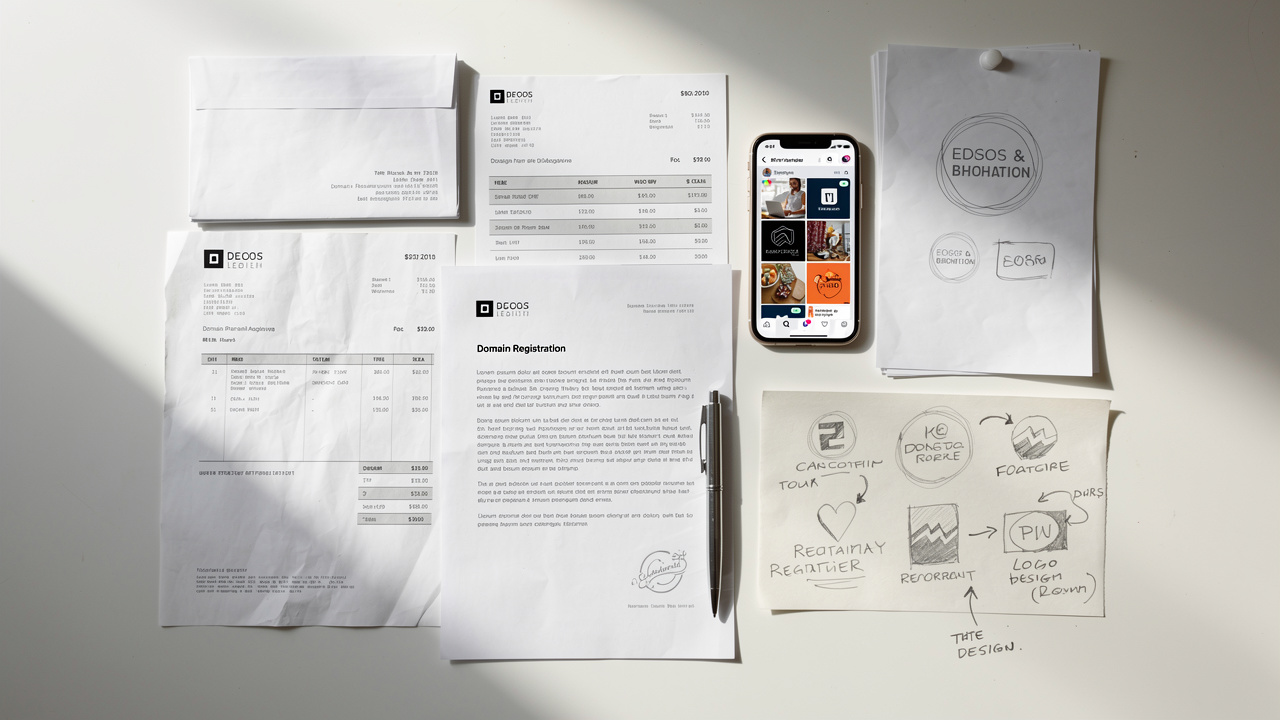
Many founders assume that only owners of registered trademarks can oppose, which is not correct. Section 21 of the Trade Marks Act 1999 clearly says that any person can oppose a trademark after advertisement, a nuance explored in depth when Understanding Trademark Opposition in India from a brand owner’s perspective. That means the door is open to a wide range of people and entities that may be affected by a new mark.
Individuals can oppose when they believe that registration would harm their interests. This may include a prior user of an unregistered mark who has built goodwill in a name through long use. It may also include a consumer who sees a mark that is misleading or offensive in nature.
Companies and corporations often file opposition when a new mark looks similar to their house mark or key product brands. They may wish to avoid confusion in the market or dilution of a strong mark. For them, a practical guide to trademark opposition in India becomes part of a wider brand protection plan.
Partnership firms may rely on common law rights gained by trading under a name even without registration. If a rival comes along with a similar mark in the same line of business, opposition helps them protect their identity. Evidence like invoices, brochures and photographs of shop boards can support their case.
Trusts and other organisations can also oppose if a mark stands against their goals or uses words tied closely to their activities. This can matter for educational, religious or charitable bodies that rely on trust in their names. Members of the public may support them with information and documents.
Even when a mark is not yet registered in favour of the opponent, proof of prior use carries strong weight. I advise clients to keep records such as dated invoices, social media posts, advertisements, domain registrations and old logo files. These often decide which side appears more genuine before the Registrar.
“The goodwill of a business is its most subtle asset, and trademarks are one of the chief channels through which that goodwill is preserved.”
— Adapted from classic trademark jurisprudence
Valid Grounds For Opposing A Trademark In India
Not every dislike or business rivalry gives a good reason to oppose. The Trade Marks Act 1999 lists several accepted grounds that fall into two broad groups:
Absolute grounds – focus on the nature of the mark itself (for example, descriptive or generic words).
Relative grounds – focus on conflict with earlier rights (for example, similarity to a prior mark).
A good guide to trademark opposition in India must explain both, because choosing the right ground often decides success.
Below is a simple table that captures the main grounds that opponents usually rely on.
| Ground | Brief Explanation |
|---|---|
| Identical or Deceptively Similar | The mark is the same as or very close to an earlier mark and may confuse buyers. |
| Lack Of Distinctive Character | The mark cannot help people identify the origin of goods or services. |
| Descriptive Nature | The mark simply describes features such as kind, quality or place of origin. |
| Generic Or Customary Terms | The mark uses common trade or everyday words that others also need to use. |
| Likely To Deceive Or Cause Confusion | The mark may mislead people about the nature, quality or origin of goods. |
| Bad Faith Application | The applicant acts dishonestly, such as copying a well‑known mark or blocking a rival. |
| Contrary To Law Or Morality | The mark offends public sense of decency or goes against existing law. |
| Hurts Religious Sentiments | The mark is likely to hurt the religious feelings of any group in India. |
| Prohibited Under The Emblems Act 1950 | The mark wrongly uses protected names or emblems of government or international bodies. |
From my experience with startups, two grounds come up more often than others:
Identity or deceptive similarity, where a later filer selects a name and logo that looks too close to a prior brand in the same class. Even small changes in spelling or style may not save such a mark if the overall impression is the same.
Bad faith, where someone knowingly picks a rival’s mark to ride on the goodwill that already exists.
A well planned guide to trademark opposition in India helps readers match the facts of their case with one or more of these legal grounds. Weak or irrelevant grounds can harm even a strong factual case, so this part should never be treated as a simple formality.
The Step By Step Trademark Opposition Procedure In India
Once a founder understands who can oppose and on what basis, the next question is how the process actually runs. The procedure has clear stages with firm deadlines and specific forms, consistent with India: Trademark procedures and strategies outlined by the World Trademark Review. Missing a single step can lead to loss of rights, which is why every serious guide to trademark opposition in India spends time on this section. I will walk through each stage in the order in which it usually happens.
Step 1 – Publication In The Trademarks Journal
After the Registry examines and accepts a trademark application, it appears in the Trademarks Journal. This online journal usually comes out every Monday and serves as public notice of the acceptance. From the date of that advertisement, a four‑month period opens up for any person to file an opposition, so regular watching of the Journal is an important habit.
A simple routine many businesses follow is:
marking a weekly calendar reminder to check the Journal, and
searching for their house marks, key product marks and close variants.
Step 2 – Filing The Notice Of Opposition (Form TM-O)
If someone decides to challenge the mark, the first formal step is a notice of opposition. This must reach the Registry within four months from the date on which the application appears in the Journal, with no routine extension. The notice uses Form TM‑O along with the official fee, and it must give:
details of the opposed mark,
full details of the opponent, and
clear grounds for opposition based on the Act.
Once filed, the Registrar sends a copy of this notice to the applicant. If the opponent misses this four‑month window, the right to start opposition for that mark usually disappears forever, which is why any careful guide to trademark opposition in India highlights this date.
Step 3 – Filing The Counter Statement By The Applicant
When the applicant receives the notice of opposition, the ball moves to their side. They must file a counter statement within two months from the date of receipt of the notice, once again using Form TM‑O. This document should:
answer each ground raised by the opponent, and
place simple facts that support their own claim to the mark.
The Registrar then forwards a copy of the counter statement to the opponent. If the applicant fails to send this counter statement on time, the application is treated as abandoned under Section 21 and the mark does not proceed to registration.
Step 4 – Evidence Submission By The Opponent (Rule 45)
Once the counter statement is on record, the opponent must support their claims with proof. Within two months of receiving the counter statement, the opponent may file evidence in the form of an affidavit with documents such as invoices, advertisements and market surveys, and must send a copy to the applicant.
Rule 45 of the Trade Marks Rules 2017 covers this stage and gives the opponent the option either:
to file evidence, or
to state that they will rely only on the facts already pleaded.
If no evidence is filed and no such statement is made within the time allowed, the opposition is treated as abandoned and comes to an end.
Step 5 – Evidence Submission By The Applicant (Rule 46)
After the opponent’s evidence reaches the Registry, the applicant gets a chance to reply. Within two months, the applicant may file an affidavit with their own supporting documents, such as:
proof of honest adoption,
sales figures, or
records of independent creation and branding.
A copy of this material must also go to the opponent to keep the process fair. Rule 46 of the Trade Marks Rules 2017 governs this stage, and if the applicant does not act within time, the application stands abandoned, which means that the mark will not move ahead to registration.
Step 6 – Reply Evidence By The Opponent (Rule 47) And Final Hearing
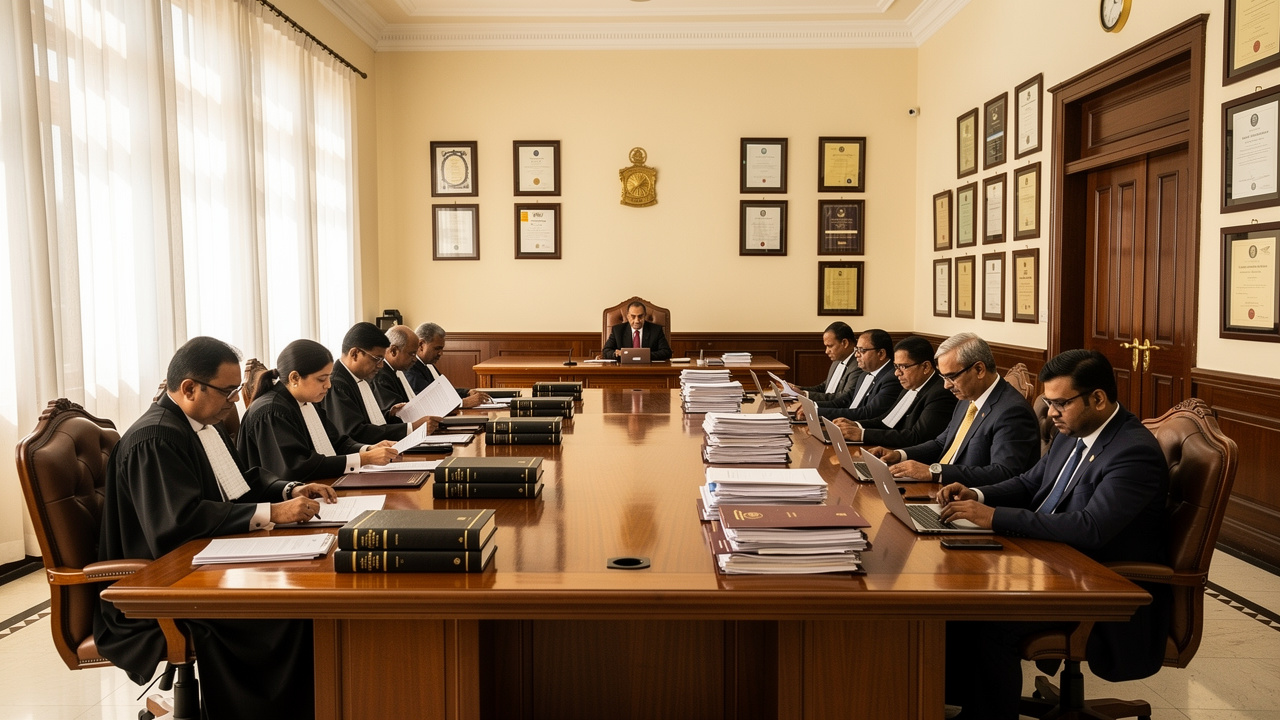
At this point, the opponent has one last procedural right to answer the applicant’s evidence. Within one month of receiving the applicant’s materials, the opponent may file reply evidence under Rule 47, but only to answer points already raised. Fresh grounds or new issues do not belong in this step.
Once all evidence stages finish, the Registrar:
fixes a date for the final hearing, and
sends notice to both sides or their trademark attorneys.
Both parties should attend and present oral arguments backed by their written material, because:
if the opponent stays absent, the opposition may be dismissed, and
if the applicant does not appear, the application may be treated as abandoned.
A helpful guide to trademark opposition in India always stresses that careful preparation for this hearing can matter as much as the written forms.
To summarise the key timelines:
| Stage | Time Limit (From Previous Step) |
|---|---|
| Filing notice of opposition (Form TM‑O) | Within 4 months of advertisement in Trademarks Journal |
| Filing counter statement | Within 2 months of receiving notice of opposition |
| Opponent’s evidence (Rule 45) | Within 2 months of receiving counter statement |
| Applicant’s evidence (Rule 46) | Within 2 months of receiving opponent’s evidence |
| Opponent’s reply evidence (Rule 47) | Within 1 month of receiving applicant’s evidence |
Missing any of these deadlines can change the entire result, even when the factual case is strong.
Possible Outcomes And Post Decision Remedies
After reviewing all the documents and hearing both sides, the Registrar issues a written decision. The main outcomes are:
Opposition dismissed – applicant succeeds
The opposition is rejected and the applicant wins. In that case, the trademark moves ahead to registration and the Registry issues a registration certificate in due course, subject to any existing conditions in the Act. For a business, this means they can use the ® symbol and enjoy statutory rights.Opposition allowed – opponent succeeds
The opposition succeeds and the opponent wins. When this happens, the trademark application stands refused for registration, and the mark does not enter the register for those goods or services. This can feel harsh for an applicant who has already invested in branding, which is why checking the register and following a good guide to trademark opposition in India even before filing a new mark can save trouble.Conditional or limited registration
Sometimes the Registrar chooses a middle path and allows conditional registration. This may involve limiting the goods or services, restricting the area where the mark can claim exclusivity, or recording other conditions that cut down the risk of confusion. Both sides should study such conditions carefully, as they shape how the mark can be used in the market.
If either side feels that the order has clear mistakes, a review petition can go before the same Registrar within one month from receipt of the decision. This asks the officer to look again at specific points, not to run a fresh full hearing.
For deeper disagreement, an appeal lies before the relevant High Court, usually within three months from the date on which the order reaches the party. High Court work is technical and time consuming, so I always suggest speaking with a Registered Trademark Attorney before taking that step.
“Courts do not protect trademarks as mere words; they protect the commercial reputation that stands behind them.”
— Observed in Indian trademark case law
Conclusion

Trademark opposition may look dry at first glance, but it plays a strong role in shaping brand rights in India. It gives honest businesses a chance to block confusing or dishonest marks and at the same time pushes applicants to adopt marks that stand on their own. A clear guide to trademark opposition in India helps founders see this process as a standard part of brand planning, not only as an emergency tool.
The key theme that I repeat with clients is respect for deadlines. Four months for filing opposition, two months for counter statements and evidence rounds, and fixed hearing dates all carry serious consequences if missed. Careful watching of the Trademarks Journal and timely action can save a great deal of later conflict.
This article from my platform, Advocate Rajesh Arya – Registered Trademark Attorney, aims to explain the process in a simple and honest way. It does not replace legal advice specific to your facts. For any live or sensitive matter, a direct discussion with a Registered Trademark Attorney is always wise. For further learning on brand protection and trademark practice in India, readers can continue exploring my detailed guides and insights.
FAQs
Question 1: Can I oppose a trademark if I have not registered my own mark yet?
Yes, Indian law allows any person to oppose an application, even without a registered mark in hand. Prior use of a similar mark still carries strong value when backed by clear documents and market presence. A thoughtful guide to trademark opposition in India will always highlight the strength of genuine prior use. Collect and preserve proof of that use before you start the process, such as:
dated invoices,
advertising material, and
screenshots of web pages and social media.
Question 2: What happens if I miss the four‑month deadline to file an opposition?
The four‑month period from the date of advertisement is firm and extensions are rare. Once this window closes, the ordinary right to file opposition ends and the application moves ahead toward registration if no other issues exist. At that stage, options usually shift from opposition to more complex court action. That is why every serious guide to trademark opposition in India stresses watching the Trademarks Journal on a regular basis.
Question 3: How long does the entire trademark opposition process take in India?
The legal rules set short periods for each filing stage, but the overall matter often takes longer. Hearings may be spaced out due to Registry workload, and adjournments by parties can also add time. In practice, many cases run from one year to several years before a final order arrives. Careful planning, clear documents and steady follow up through a trademark attorney can help keep things moving as smoothly as possible.
Question 4: What is the official fee for filing a trademark opposition in India?
The government fee for filing Form TM‑O must be paid at the time of submitting a notice of opposition. Fee amounts can change when the authorities revise the schedule, so it is always wise to check the latest figure on the official IP India website or consult a current guide to trademark opposition in India. Apart from this, professional fees of a trademark attorney, if engaged, will depend on the scope and complexity of the work.