Introduction
A new founder spends months designing a logo, prints it on packaging, builds a website, and launches ads. Business picks up, customers start to recognise that logo, and then a notice arrives saying the logo belongs to someone else who registered it first. All that brand work is suddenly at risk. A clear understanding of the logo registration process in India helps avoid exactly this problem.
When a logo is registered as a trademark under the Trade Marks Act, 1999, it becomes more than art. It turns into a legal right that the owner can enforce anywhere in India. The Trade Marks Registry, working since 1940 through offices in Mumbai, Ahmedabad, Kolkata, New Delhi, and Chennai, receives thousands of applications from startups, small businesses, and large companies that want to protect their logos and brand names.
In this step-by-step guide for 2026, I walk through the full logo registration process in India. I cover pre-filing checks, documents, official stages, costs, and how to decide between self-filing and using a professional. This article is for founders, small business owners, brand managers, students, and anyone curious about trademark law. I write as Advocate Rajesh Arya, a Registered Trademark Attorney, but this guide is purely educational. It does not replace personal legal advice for any specific case.
Key Takeaways
Logo registration in India works under the Trade Marks Act, 1999 and is handled by the Trade Marks Registry, which gives a single national system for brand protection.
The full process usually moves through five stages: filing, examination, journal publication, opposition window, and final registration.
Government filing fees are charged per class of goods or services. Individuals, startups, and small enterprises pay a lower fee than regular companies and larger entities.
A registered trademark is valid for ten years from the filing date and can be renewed for further ten-year periods, as long as renewal is filed on time.
Working with a registered trademark attorney such as me can increase the chances of smooth registration, especially where there are objections, oppositions, or hearings.
“Your brand is what other people say about you when you’re not in the room.”
— Jeff Bezos
Why Registering Your Logo As A Trademark Matters
When you register a logo as a trademark, you gain the exclusive right to use that mark for the goods or services listed in the registration. This right is recorded in the official Register and can be enforced through legal action.
A registered logo helps you:
Stop others from using a confusingly similar mark in the same or related class.
Send legal notices and file infringement actions, if required.
Build brand value that can be licensed, franchised, or sold with the business.
There is also a strong visual signal. Before registration, a business can use the TM symbol to show that it claims the mark. After the logo registration process in India is complete, the owner can use the ® symbol. That small circle tells competitors and customers that the logo is recorded with the Registry and carries legal backing.
India’s startup scene is active, with new brands launching every week, which makes brand clashes far more likely. An unregistered logo is harder to defend because there is no official entry in the Register. A registered mark, on the other hand, becomes a clear business asset that can support valuation during funding or exits.
Trademark rights are class-specific, which means the logo is protected only for the goods or services classes chosen in the application. Following the logo registration process in India correctly from the first filing is therefore vital. My aim as Advocate Rajesh Arya is to help entrepreneurs understand these rules so they can protect what they build with confidence.
“A trademark is a sign capable of distinguishing the goods or services of one enterprise from those of other enterprises.”
— World Intellectual Property Organization (WIPO)
Pre-Filing Essentials – Trademark Search And Class Selection

Before filing any form, two steps have a big impact on the final result: a proper trademark search and correct class selection. Skipping these steps often leads to objections, oppositions, or wasted fees later in the logo registration process in India.
Conducting A Trademark Search
The first step is to see whether a similar logo or word mark already exists. This can be done on the IP India Public Search portal, which is free and open to everyone.
A good search should:
Check for both word marks and device (logo) marks.
Look for similar marks, not just exact matches.
Cover both registered marks and pending applications.
Pending applications matter because they can block your mark just like registered ones. If a confusingly similar mark appears, it is smarter to rethink the logo or brand name before filing rather than argue later during examination or opposition.
When I conduct searches for clients, I often share a short report that lists:
Conflicting marks, if any.
The classes in which they are filed.
A practical assessment of risk and options.
This early step saves both time and money.
Selecting The Right NICE Classification Class
The next step is choosing the correct classes using the NICE Classification system. This system has 45 classes in total:
Classes 1–34: goods
Classes 35–45: services
Some common examples:
Class 25 – clothing, footwear, headgear
Class 36 – insurance and financial services
Class 41 – education and entertainment services
Protection under the Trade Marks Act, 1999 is tied directly to the classes chosen in the application. If a clothing brand files only in a services class and skips Class 25, another party may try to register a similar logo for clothes.
Businesses with multiple product lines often need:
More than one class in a single application, or
Separate applications for different brands or logos.
When there is confusion about which class to select, speaking with a registered trademark attorney before moving ahead with the logo registration process in India is a wise step.
Documents Required For Logo Trademark Registration
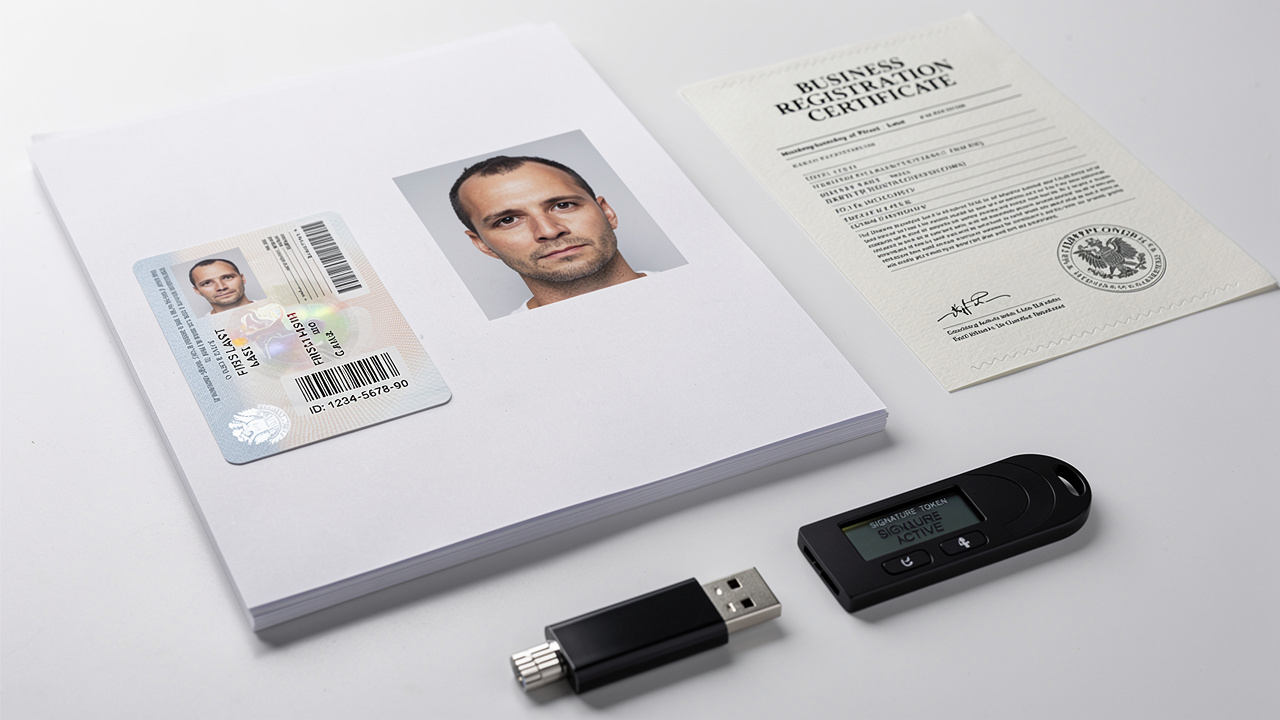
Having the right documents ready before filing keeps the logo registration process in India smooth and reduces the chance of delays.
PAN Card and Aadhaar Card work as basic proof of identity and address for individual applicants or sole proprietors. The spellings on these records should match the application.
A business registration certificate is needed when the applicant is a company, partnership firm, LLP, or registered startup. This could be a Certificate of Incorporation, Partnership Deed, MSME registration, or Startup India certificate. The name on this record becomes the legal owner of the trademark.
A clear logo image is needed when filing for a device mark or a logo with both words and design. The file should show clean lines and colours so the Registry can examine it easily. For pure word marks, this is not required.
A Class 3 Digital Signature Certificate (DSC) is needed for applicants who plan to file online on their own. The DSC allows secure login and electronic signing of forms on the e-filing portal.
A signed Power of Attorney in Form TM-48 is needed when an attorney or agent files the application. This confirms that the professional is authorised to act for the applicant. I always ask clients to sign it clearly before any filing starts.
The Step By Step Logo Registration Process In India
The formal logo registration process in India moves through five main stages. Each stage has its own purpose and timelines.
Step 1 – Filing The Trademark Application (Form TM A)
The process starts by filing Form TM-A with the Trade Marks Registry. Filing can be done:
Online through the official e-filing portal, or
Physically at one of the five Registry offices (Mumbai, Ahmedabad, Kolkata, New Delhi, Chennai).
The appropriate office is chosen based on the applicant’s main place of business.
For online filing, the applicant must:
Create an account on the portal.
Select the type of applicant and obtain a Proprietor Code.
Link a valid Class 3 DSC.
Fill Form TM-A with details of the logo, classes, and applicant.
Pay the government fee and submit the form.
The system then generates an application number, which is the key reference for tracking the logo registration process in India.
Step 2 – Examination By The Trademark Examiner

After filing, the application goes to a Trademark Examiner. Examination has two parts:
Formal examination – checks whether:
The correct class has been chosen.
Required documents are attached.
The goods or services description is clear.
Substantive examination – checks whether:
The logo is distinctive or merely descriptive.
There are earlier marks that look or sound similar in related classes.
If the examiner finds issues, an Examination Report is issued and uploaded to the portal. The applicant then has one month to reply with arguments and legal grounds supporting the mark. Often, a hearing is fixed after the written reply. During such hearings, I present reasons, case law, and clarifications before the officer.
If the examiner is satisfied, the application proceeds to advertisement in the journal.
Step 3 – Publication In The Trade Marks Journal
When an application is accepted, it is advertised in the Trade Marks Journal on the IP India website. This public notice:
Informs others that the applicant seeks rights over the mark.
Gives anyone who might be affected a chance to object.
At this stage, the applicant does not need to file anything new. However, it is wise to monitor the status in case an opposition is lodged. The journal stage may feel like a waiting period in the logo registration process in India, but it is a key checkpoint.
Step 4 – Opposition Proceedings If Applicable
From the date of advertisement, third parties have four months to file a Notice of Opposition if they believe the mark conflicts with their rights. An opposition is a formal dispute within the Trade Marks Registry.
The usual sequence is:
Opponent files a Notice of Opposition.
Applicant files a counter statement replying to each ground.
Both sides file evidence through affidavits and documents.
A hearing is fixed before a hearing officer.
During these hearings, a trademark attorney plays an active role in presenting written and oral arguments. If the officer finds the opponent’s case weak, the opposition is dismissed and the application moves ahead. If the officer agrees with the opponent, the application can be refused.
If no opposition is filed within four months, the case moves towards registration automatically.
Step 5 – Registration And Certificate Issuance
Once the application clears the opposition stage, the Registry proceeds to register the logo. A Certificate of Registration is issued in the name of the applicant and is also visible in the online record. From this date, the logo becomes a registered trademark with full statutory rights.
Key points:
Registration is valid for ten years from the filing date, not from the certificate date.
The owner can file for renewal before the end of this period to extend protection for another ten years.
After completion of the logo registration process in India, the owner should monitor the market, watch for confusing uses by others, and act when needed.
Without active enforcement, even a registered right can lose practical value over time.
Costs And Self Filing Vs Hiring A Trademark Attorney

Before starting the logo registration process in India, it helps to understand the costs involved and the options for filing. Costs fall into two parts:
Government filing fees, and
Professional fees, if a trademark attorney is engaged.
Government Filing Fees Per Class
| Applicant Type | E-Filing Fee In Rupees |
|---|---|
| Individuals, Startups, Small Enterprises | 4,500 |
| All Other Entities Including Larger Companies And LLPs | 9,000 |
These fees apply per class. If a business files in two classes, the government fee is charged twice. The fee is the same whether the mark is a word or a logo.
When a registered trademark attorney handles the work, there will also be a professional fee. For many straightforward cases, the total cost per class (government fee plus drafting and filing charges) often falls somewhere around 6,000 to 7,000 rupees. Matters involving detailed searches, replies, or hearings may require higher professional time and a separate fee.
To compare self-filing with attorney-assisted filing, it helps to see the differences side by side.
| Feature | Self Filing | Attorney Assisted Filing |
|---|---|---|
| Cost | Only government fee is paid | Government fee plus professional charges |
| Process Handling | Applicant learns and manages forms and portal | Managed by a professional who files such cases daily |
| Objections & Hearings | Applicant drafts replies and appears alone | Attorney prepares replies and argues at hearings |
| Time & Effort | Higher personal time investment | Time saved for core business activities |
As Advocate Rajesh Arya, I respect that some people prefer to self-file to save money. At the same time, I have seen many applications struggle because early steps were not handled carefully. In many cases, professional help becomes a sensible investment in long-term brand safety.
Conclusion
The logo registration process in India may look long, but each stage has a clear role. An application is filed, examined, advertised in the Trade Marks Journal, opened to any opposition, and then, if there are no serious hurdles, granted registration with a ten-year term. When a logo reaches that stage, it becomes a strong legal shield for the brand behind it.
Brand protection is no longer optional in a crowded market. A proper search, correct class selection, complete documents, and well-prepared replies to objections all raise the chance that a logo will stand on firm legal ground. I encourage you to start with a simple step: check your proposed mark on the IP India search portal.
Through this platform, I share my experience as Advocate Rajesh Arya to make trademark law easier to understand. If this guide helped clarify the process, explore more articles on related topics or seek professional guidance before filing. A small step now can prevent far greater stress later.
FAQs
How Long Does The Logo Registration Process Take In India
The time taken for the logo registration process in India depends on how smooth the case is. When there are no major objections or oppositions, many applications finish in about 12–18 months after filing. If the examiner raises strong objections or if third parties file oppositions, the timeline can extend to 2–3 years. Responding quickly to every office action and notice helps avoid extra delay.
Can I Use The R Symbol After Filing My Application
After filing an application, the owner can start using the TM symbol next to the logo. This shows that a claim has been made over the mark and that the logo is in the process of registration. The ® symbol can be used only after the Trade Marks Registry issues the Certificate of Registration. Using the ® symbol before registration is complete can create legal trouble and should be avoided.
What Happens If My Trademark Application Is Rejected
If the Registry fully refuses an application after examination and any hearing, the applicant still has options. A refusal order can be challenged before the appropriate High Court through an appeal, subject to legal time limits and grounds. In my practice, I find that early professional input prevents many rejections by shaping the application, replies, and evidence in a better way. If a case does get refused, it is wise to consult a trademark attorney before deciding whether to appeal or file a fresh application.
Is Logo Registration Valid Across All Of India
Yes. A trademark registered with the Indian Trade Marks Registry gives protection across the whole of India. The place where the application is first filed, such as Mumbai or Delhi, affects only the internal handling office and does not limit the geographical reach of the right. Once the logo completes the logo registration process in India and is registered, the owner can act against infringing use anywhere in the country.