Introduction
Picture a small tech team in Bengaluru that has spent a year building a product, logo, and excitement around a catchy name. Just when the first big press article is about to go live, a legal notice arrives saying that someone else already owns that name as a registered trademark. The entire brand has to be changed in a hurry, and months of goodwill vanish overnight. Many founders only search for “trademark for tech startups in India” after they see a story like this, but by then it can be very late.
As a registered trademark attorney, I see this pattern again and again. In India, a trademark is the legal shield around a brand name, logo, app icon, or tagline. For a tech startup, that brand is often more valuable than the code itself because it is what users remember, search for, and recommend. A clear plan for trademark for tech startups in India gives that brand legal backing from the very start.
“Your brand is what other people say about you when you’re not in the room.” — Jeff Bezos
Many founders still believe trademarks are expensive, complicated, or something to worry about only after product‑market fit. My work through the platform of Advocate Rajesh Arya is to break this myth and explain the law in simple, honest language for non‑lawyers. In this article I walk through what trademarks protect, why early filing matters, how the Indian process works, what government rebates exist for startups, and the common mistakes I see in practice. Everything here is educational, based on real experience, and it is not a substitute for formal legal advice on any one case.
Key Takeaways
File your trademark application as early as possible. India follows a first‑to‑file rule. The startup that files first for a given mark usually has the stronger position.
Use the correct symbol at the correct time. The TM symbol can be used as soon as you file the trademark application. The registered symbol (®) is allowed only after the mark is granted by the registry.
Make smart use of government rebates. DPIIT‑recognized startups get a fifty percent cut in government trademark fees under the SIPP scheme. This keeps the cost of trademark for tech startups in India within a realistic early‑stage budget.
Pay attention to classes and time limits. File in every relevant trademark class for your current and near‑future business, and renew every ten years. Missing a class or a renewal can leave gaps in protection.
Treat a registered mark as a business asset, not just a legal formality. It can raise investor comfort during due diligence and can support licensing or franchise models as the company grows.
Why Trademarks Are The First IP Priority For Tech Startups In India

When founders think about intellectual property, they often think of patents first. In practice, for most tech startups, the first urgent step is a solid trademark for tech startups in India, not a patent. To see why, it helps to compare the main kinds of IP and what each one really protects in a young company.
Here is a simple overview that I often share with founders during early calls.
| IP Type | What It Protects | Duration | Best For |
|---|---|---|---|
| Trademark | Brand names, logos, slogans, sounds | 10 years, renewable | All startups |
| Patent | New inventions, processes, technology | 20 years | Deep‑tech and hardware |
| Copyright | Code, content, UI or UX designs | Lifetime of author plus 60 years | SaaS and content‑driven businesses |
| Trade Secret | Algorithms, data, internal processes | As long as it stays secret | All startups |
Patents, copyrights, and trade secrets protect what is inside the product. A trademark protects how the market sees and remembers the product. When a user searches an app store, types a name into a search engine, or taps on an icon on their phone, they are dealing with the trademark. This is why I say that the brand identity sits at the front door of the business.
“Products are made in the factory, but brands are created in the mind.” — Walter Landor
Investors look at this front door very closely. During due diligence, they ask whether the brand name and logo are free to use, whether a trademark for tech startups in India has already been filed, and whether there is any risk of another company claiming the same or a similar mark. A registered or at least pending mark signals planning, reduces risk, and can support a higher valuation.
There is also a clear money angle:
A strong registered trademark can later be licensed or franchised, bringing in revenue even beyond product sales.
The mark can be recorded as an intangible asset on the company’s books.
Clean ownership over the brand reduces friction in funding, M&A, or exit discussions.
On the other hand, delaying filing can force a painful rebrand if someone else files first. I have seen promising startups lose domain names, app store listings, and a large part of their user trust because they skipped this step. For most SaaS, fintech, edtech, and e‑commerce ventures, getting the brand name protected is far more immediate and realistic than building a patent portfolio on day one.
What Can Be Trademarked? A Guide For Tech Founders

Many founders have a mental picture of a trademark as only a company name with a fancy font. In reality, Indian law allows protection over several parts of a tech brand, and a smart trademark for tech startups in India usually covers more than one of them. Understanding what can and cannot be registered helps avoid bad name choices and wasted filings.
The main elements that can be protected include:
Word marks
This is simply the name of the startup, product, or app written in plain text, for example the way “Swiggy” or “Zomato” appears. A word mark gives the widest shield because it covers the name regardless of font or style.Logo or device marks
A logo or device mark protects the visual symbol, such as an app icon or a stylized brand mark. Many tech companies file both the word mark and logo mark so the name and visual identity are each protected in their own right.Slogans and taglines
Slogans and taglines can also be registered if they are distinctive and not just a flat description of the service. Short, sharp phrases that users start to associate with your app or platform are often worth filing as trademarks.Non‑traditional marks
A short sound that plays when your app opens, or a consistent, distinctive color combination across your interface and marketing, may also be accepted if they point clearly to your brand.
Some things cannot be registered, and I always ask founders to test their chosen name against these limits before they even think of filing:
Purely generic or descriptive terms such as “Software” for a software product, or “Fast Delivery” for logistics, are weak choices and very likely to face refusal.
Marks that are confusingly similar to existing registered marks can be refused and may also trigger legal disputes.
Marks that copy national flags or official symbols, and marks that are obscene or offensive, will run into trouble with the registry.
There is regular confusion over the TM and registered symbols. Once you file a trademark for tech startups in India, you can use TM with your brand to show that you claim rights over it. The registered symbol (®) should only appear after the mark is fully registered and a certificate has been issued. Using the registered symbol too early is not just a small error; it is treated as an offence under Indian law. As a simple practical rule, I advise founders to file both the word mark and logo mark separately, and then use TM next to both while the applications move through the system.
The Trademark Registration Process In India Step By Step

The Indian trademark process looks scary at first glance, but when broken into clear steps it becomes quite manageable. When I guide founders who want a trademark for tech startups in India, I usually follow the same sequence and timelines.
1. Conduct A Trademark Search
Start with a proper trademark search before you fall in love with any name or logo. Use the IP India public search portal to look for identical or similar marks in the same classes that you plan to use. Check:
Spellings that sound similar
Logos that could be confused with yours
Marks that cover related services or products
Many of the worst disputes I have seen began because this step was skipped in a hurry to print visiting cards and build a website.
2. Identify The Correct Trademark Classes
Next, identify the correct trademark classes. India follows the Nice Classification with forty‑five classes that cover goods and services. A typical tech startup might need:
Class 9 for downloadable software
Class 42 for software as a service or cloud‑based services
Class 35 for marketing or business‑related services
Think about what you sell today and what you plan to sell in the near future, and add every class that fits. You can use one application form to cover several classes at once.
3. File The Application (Form TM‑A)
Once name, logo, and classes are clear, you file the application using Form TM‑A on the IP India portal. The form asks for:
Details of the applicant
A clear copy of the mark
A description of the goods or services
The date of first use, if the mark is already in use
The date of filing itself becomes very important because India follows the first‑to‑file principle. On the day you file, you can start using the TM symbol with your mark.
4. Examination By The Registry
After filing, a trademark examiner reviews the application. The examiner checks if the mark is capable of standing out from others and whether it conflicts with any earlier mark. If the officer finds issues, an examination report is issued with reasons.
As an applicant, you normally get one month to respond with legal arguments and sometimes evidence of use. Many applications die at this stage only because founders do not track the deadline or do not seek help when objections arrive.
5. Publication And Opposition
If the examiner is satisfied, the mark is accepted and published in the Trademark Journal. This is a public notice step and opens a four‑month window in which anyone who feels harmed by the mark can file an opposition.
If no one objects, or if an opposition is filed and later decided in your favor, the registry moves the application to the next stage.
6. Registration And Renewal
The last step is registration and issue of the certificate. Once the certificate is generated, you can switch from TM to the registered symbol (®) for that mark.
Under normal conditions, the entire process from filing to registration takes around eight to twelve months for a straightforward trademark for tech startups in India. If there are heavy objections or a serious opposition, it can stretch to eighteen to twenty‑four months. Registration is valid for ten years from the filing date and can be renewed for more ten‑year blocks again and again, as long as renewal fees are paid on time.
Government Support For Startups Under The SIPP Scheme And Fee Rebates
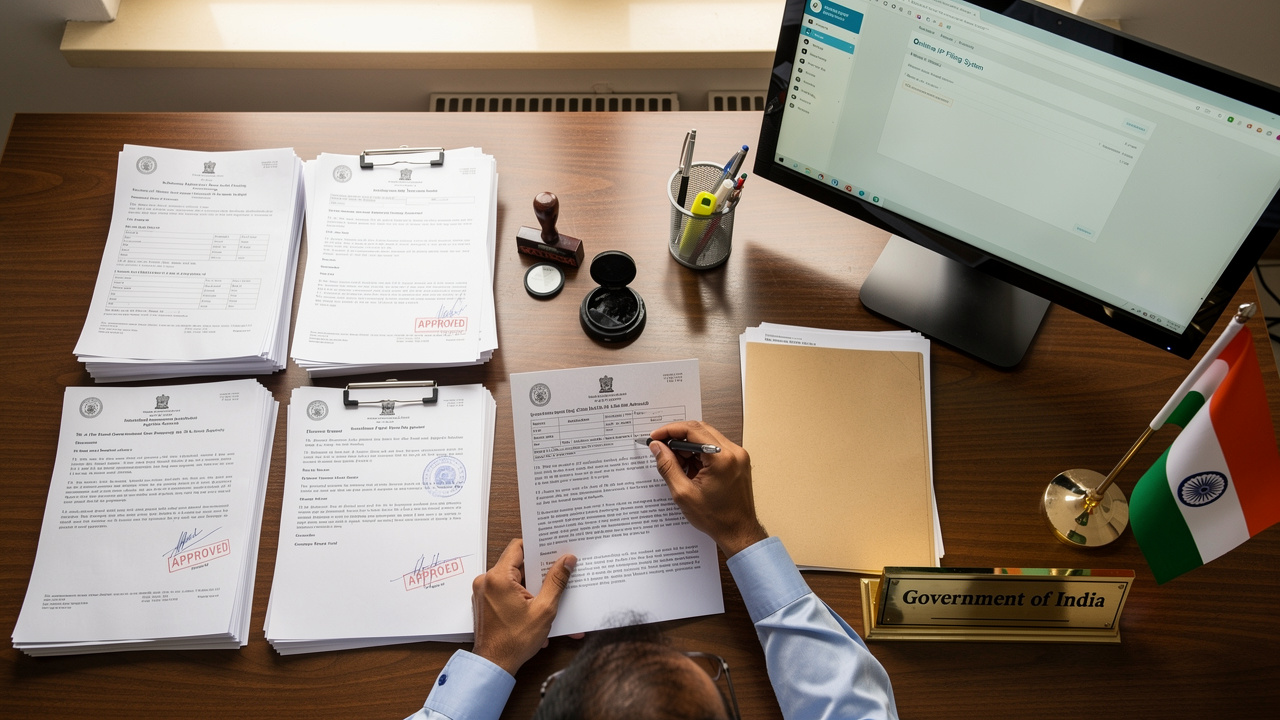
One reason some founders delay filing a trademark for tech startups in India is fear of legal costs. The good news is that the Startup India initiative and the Scheme for Startups Intellectual Property Protection (SIPP) make IP far more affordable for DPIIT‑recognized startups.
Under this scheme, a recognized startup gets a strong rebate on government charges. For trademarks, the official fee for an online application is ₹4,500 per class for a startup, compared to ₹9,000 per class for a larger company. For patents, the cut is even deeper, with nearly eighty percent off the normal fee slab. For a young team managing runway, these differences matter.
There is also structured help from trained professionals. The government maintains a panel of IP facilitators, which includes trademark and patent attorneys, to assist startups with their filings. Under SIPP, the central government pays the professional fee of these facilitators for drafting and filing patents, trademarks, or designs. The startup only pays the reduced government fee. For patent work, there is also an option to seek faster examination, which can bring a patent decision in a much shorter time frame than usual.
To make budgeting for a trademark for tech startups in India easier, I often share a simple cost picture like this.
| Cost Component | Recognized Startup | Other Entities |
|---|---|---|
| Government Filing Fee per class | ₹4,500 | ₹9,000 |
| Professional or Legal Fees | ₹3,000–₹15,000 | ₹3,000–₹15,000 |
| Objection or Opposition Response | ₹3,000–₹10,000 | ₹3,000–₹10,000 |
| Renewal every ten years per class | ₹9,000 | ₹9,000 |
| Estimated Total per class | ₹8,000–₹25,000 | ₹12,000–₹35,000 |
When this is compared with the risk and cost of a forced rebrand, lost users, or a legal fight, early filing looks far more reasonable. Through my platform as Advocate Rajesh Arya I try to help founders understand these numbers in plain terms so they can take timely action with full information.
Common Trademark Mistakes Tech Startups Must Avoid

After working with many founders on trademark for tech startups in India, I see the same patterns of mistakes. Most of them are easy to avoid with a little awareness, but the damage can be huge if they are missed.
Not Searching Before Naming. Many teams pick a brand name because the .com domain is free or because it sounds catchy, and they never check the trademark register. This can lead to an application being refused or, worse, a legal notice from a prior owner. A careful pre‑filing search often takes less than an hour but can save months of trouble.
Delaying The Trademark Application. Some founders wait for a funding round or a big launch before they file, but India works on a first‑to‑file rule. Another business can quietly file the same or a similar mark while you are building in the background. When that happens, even if your use started earlier, your position becomes harder to defend and the cost of fixing the problem rises.
Filing In Only One Trademark Class. A tech company might be offering a mobile app, web service, and consulting under one brand. If the mark is filed only in, say, Class 42, a competitor can try to register the same or similar mark in Class 35 or Class 9. I always ask founders to think carefully about every class that matches their current and near‑future offerings and file in each one.
Skipping IP Assignment Clauses In Contracts. By default, the designer owns the logo and the developer owns the code they write, unless a contract clearly says otherwise. If your founders, employees, agencies, or freelancers do not sign agreements that assign IP to the company, you could face serious questions during a funding or exit event. Clean paperwork around IP ownership is as important as filing a trademark for tech startups in India.
Publicly Disclosing Inventions Too Early. If your product has a patentable feature, open demos, pitch decks, and blog posts before at least a provisional patent filing can kill the novelty requirement. Once the invention is out in public without protection, it is very hard to repair the damage. A simple early chat with a patent professional can help you time disclosure and filings better.
Ignoring Renewal And Market Monitoring. Many people think that once their mark is registered, the job is over forever. In reality, trademarks must be renewed every ten years, and the owner has to watch the market for copycats. If you let a registration lapse or ignore clear cases of infringement, your rights can weaken over time and others may try to ride on your brand.
Conclusion
For a serious tech startup in India, protecting the brand is not a side task left for later. A thoughtful trademark for tech startups in India is one of the first real investments in the long‑term health of the company. It gives legal backing to the name and logo that customers search for, talk about, and trust.
The basic path is quite clear:
Choose a strong, distinctive brand.
Conduct a proper search.
Identify all relevant classes and file early.
Use the Startup India and SIPP benefits where they apply, so fees stay within reach.
Avoid the classic mistakes of skipping searches, delaying filings, ignoring contracts, and forgetting renewals.
Each of these steps adds a simple but strong layer of safety around your brand.
I created my platform as Advocate Rajesh Arya to give founders clear, calm explanations of these topics without heavy legal jargon or pressure. If this article has helped clarify how trademark for tech startups in India works, I encourage you to learn more before you take your next branding decision. Thoughtful protection today is one of the best ways to protect your startup’s future tomorrow. This article is general guidance only, so always seek specific legal advice for your own facts before you act.
FAQs
How Long Does Trademark Registration Take In India?
For a straightforward trademark application with no major objections or oppositions, registration usually takes around eight to twelve months. If the examiner raises serious objections or if a third party files an opposition, the process can stretch to eighteen to twenty‑four months. The filing date of Form TM‑A still fixes your priority from day one, which is why early filing is so important for a trademark for tech startups in India.
Can I Use The Registered Symbol After Filing My Trademark Application?
You cannot use the registered symbol just because you have filed your application. That symbol is allowed only after the trademark is granted and a registration certificate is issued by the trademark registry. Until that point, you should use the TM symbol with your brand to show that an application is pending. Using the registered symbol without an actual registration can lead to legal trouble, so it is better to be careful.
How Much Does It Cost To Register A Trademark In India For A Startup?
For a DPIIT‑recognized startup, the government fee for an online application is ₹4,500 per class after the fifty percent rebate under SIPP. On top of this, there are professional fees for a trademark attorney or facilitator, which usually range between ₹3,000 and ₹15,000 per class depending on the work involved. In practice, the total cost per class for a trademark for tech startups in India often falls between ₹8,000 and ₹25,000. When compared with the cost of a forced rebrand or a dispute, this is a sensible spend.
Do I Need To Register A Trademark In Every Class For My Tech Startup?
You do not have to register in all forty‑five classes, but you should cover every class that matches your goods and services now and in the near future. A typical tech startup might need Class 9 for software, Class 42 for online or cloud‑based services, and Class 35 for some business or marketing services. If you leave out a class that you later enter, another business could claim a similar mark in that space. A careful class strategy is therefore a key part of planning trademark for tech startups in India.