Article Introduction
Imagine spending months of effort on building a brand, designing a logo, printing packaging, launching campaigns, and then discovering that the name is already registered by someone else. A simple name trademark search in India could have warned you long before the first rupee was spent on branding. Without that check, there is a real risk of legal notices, takedown requests, and a painful rebrand.
We see this pattern often when founders skip a proper search and rely only on domain availability or company name checks. Under the Trade Marks Act 1999, the real test is whether another party already holds rights in a similar mark for similar goods or services. The official IP India public search portal is where this answer lives, and it is completely free to use.
In this guide, we walk through how to carry out a name trademark search in India on the IP India portal, how to read the results, how to check TM status, and how to pick stronger names from the start. As a Registered Trademark Attorney, we keep the language simple and practical, so even someone new to trademark law can follow along with confidence.
“A trademark is a sign capable of distinguishing the goods or services of one enterprise from those of other enterprises.” — World Intellectual Property Organization (WIPO)
Key Takeaways
Many founders and brand managers only have a few minutes before the next meeting. This short section gives the main lessons up front, while the rest of the guide explains each point in detail. Reading the full article then becomes far easier because the big picture is already clear.
A proper name trademark search in India should happen before filing an application or launching a brand in the market. Skipping this step often leads to objections, oppositions, or infringement threats that cost far more than the time saved at the start. Treat the search as basic due diligence, similar to a financial check.
The IP India public search portal at
https://tmrsearch.ipindia.gov.in/tmrpublicsearch/is the official, free tool for this purpose. Use it directly rather than relying only on private databases or hearsay. Government records decide conflicts, so the official database is the reference point that matters most.A careful name search should combine Wordmark, Phonetic, and the Contains modifier, along with the correct NICE class for goods or services. Narrow searches miss near matches that can still block registration. Focusing only on identical spellings is a common and risky mistake.
TM status labels such as Registered, Objected, Opposed, and Abandoned show where a mark stands in the process. Understanding these labels helps in deciding whether to file, change the name, watch a mark, or seek advice. Monitoring status over time is just as important as the first lookup.
The TM symbol can be used as soon as a mark is adopted, even before filing, while the R symbol is allowed only after official registration. For grey situations or confusing results from a name trademark search in India, professional support from a Registered Trademark Attorney reduces guesswork and saves time.
Why A Name Trademark Search In India Is Non-Negotiable
When we talk to startup founders or small business owners, they often assume that if a domain name and company registration are available, the brand is safe. Trademark law in India works very differently. The Trade Marks Registry gives priority to the first person who files a trademark for a name in a particular class, not to the first person who bought a web address. A careful name trademark search in India is the only practical way to see who filed first.
Without this search, a new brand can accidentally step on an existing registered mark. That can lead to legal notices, court cases, and forced rebranding. Even when a case does not reach court, the stress and distraction pull focus away from building the actual business. Filing fees paid to the Registry are also non-refundable, so a rejected application is money gone forever.
A thoughtful search is more than a legal formality. It is a risk management step that protects investment in design, packaging, marketing, and goodwill — a point underscored by WIPO Indicators and EAC findings on India’s rapidly growing trademark filings. In our practice, we treat every name trademark search in India as an early warning system for brand danger.
Some of the main risks of skipping this step are:
Legal action becomes a real threat when a new brand copies or comes very close to an existing registered mark. The owner of the earlier mark can demand that use stops, claim damages, and ask for removal of products from the market. Defending such claims is expensive even if the case is eventually won.
Application rejection by the Trade Marks Registry is another frequent outcome when no search is done. Examining officers compare new applications with existing marks and object when they see conflicts. Since government fees are not returned, repeated filings without research waste both time and money.
Loss of priority happens when someone else has already filed a similar mark in the same class. Even if that earlier application is still pending, it usually stands ahead in line. A good name trademark search in India uncovers such earlier filings before fresh money goes into branding.
Brand dilution and confusion occur when a new mark is close to a well-known brand. Customers may mix up the two, which is bad for both parties. The newer brand struggles to create its own space, and the older brand may fight back to protect its identity.
How To Conduct A Name Trademark Search On The IP India Portal
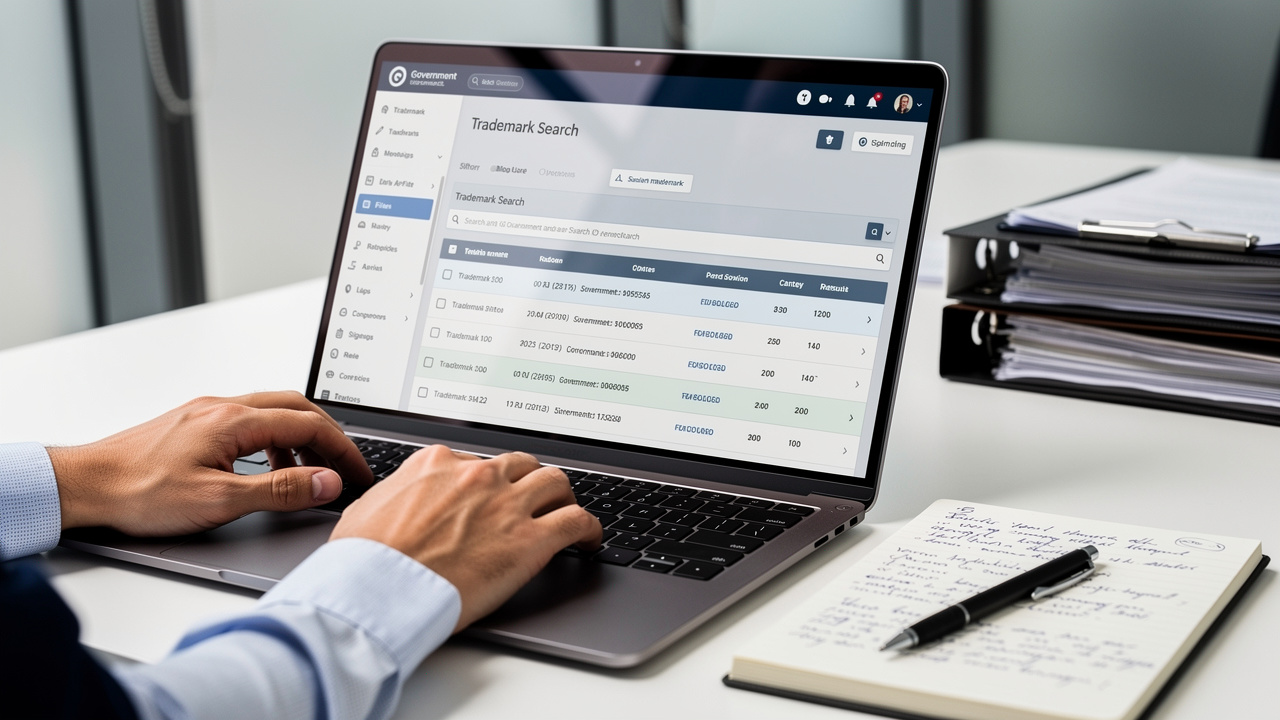
The IP India public search portal is the main tool for any name trademark search in India. It holds records of registered marks and pending applications across all classes. When we guide clients, we often start by walking them through this portal step by step, because once someone learns the basics, simple checks become much easier.
Understanding The Three Search Types

The portal offers three main search modes that cover different kinds of trademarks. To run a proper name trademark search in India, it helps to understand how each mode works and where it fits into the overall review. Relying only on one mode narrows the view and may leave hidden risks.
Here is a simple comparison:
| Search Type | Best Used For | Example Use Case |
|---|---|---|
| Wordmark | Text marks such as names, words, and slogans | Checking if a proposed brand name for clothing is already filed in Class 25 |
| Phonetic | Marks that sound similar but look different | Catching marks like Kwik and Quick or Xpress and Express in the same class |
| Vienna Code | Logos and figurative designs | Searching for a logo that shows a star, animal, or device using Vienna codes |
Along with these, the portal now also offers an AI‑based trademark search in beta form. This option tries to give broader and more intuitive results, but we still pair it with the classic modes when handling any serious name trademark search in India.
Step-By-Step Wordmark Search Guide
For a brand name search, Wordmark is usually the starting point. Once a founder learns this flow, repeating a basic name trademark search in India for new ideas becomes a quick habit rather than a mystery.
Open the official portal at
https://tmrsearch.ipindia.gov.in/tmrpublicsearch/or through ipindia.gov.in under the Trade Marks public search link. Always cross-check that the address is correct before entering any details. This habit helps avoid fake or outdated pages.Choose “Wordmark” as the search type in the first dropdown menu. This tells the system that the search will focus on text marks rather than logos. For brand names, this is almost always the right place to begin.
Enter the proposed brand name in the Wordmark field exactly as planned for use. If the name has more than one word, enter the full phrase. For a careful name trademark search in India, it is wise to test small spelling changes as well.
Select a match option from Start With, Contains, or Match With. Start With finds marks beginning with the entered word, while Match With looks only for exact matches. Contains is the broadest choice because it finds the word anywhere within longer marks.
Enter the correct NICE class number for the goods or services in the Class field. The system allows only one class per search, so separate searches are needed when a name covers more than one class. Many weak results from a name trademark search in India come from using the wrong class.
Fill in the numeric captcha and press Search. The results page then lists marks that fit the filters, along with their application numbers, owners, and status.
Tip Run the first round with the Contains modifier. This setting shows a wider range of similar marks and is far less likely to miss a risky near match.
The Importance Of NICE Classification
Every name trademark search in India must be linked to the correct description of goods or services. This is where the NICE Classification system comes in. It divides all goods into Classes 1 to 34 and all services into Classes 35 to 45.
For example:
Class 25 covers clothing
Class 9 covers software and electronics
Class 35 covers advertising and business management
Class 45 covers legal services
A mark may be clear in one class yet blocked in another, so each relevant class needs its own search. From our work at Advocate Rajesh Arya’s platform, we see wrong class choices as one of the most common beginner mistakes.
How To Interpret Your Trademark Search Results And Check TM Status
Running a search is only half the task. The real value of a name trademark search in India comes from reading the results correctly and linking them with legal reality. Status labels show where each mark stands in the lifecycle, and details in the name, class, or goods description can make a big difference.
When we review a report, we usually focus first on three aspects:
How close the names are in sound and look
Whether the goods or services overlap
What stage each existing mark has reached in the Registry
Learning this way of reading results helps brand owners make far better decisions.
Reading The Status Labels

Trademark records on the IP India portal always include a Status field. This small label carries a lot of meaning for anyone relying on a name trademark search in India. The table below sums up the main statuses and common next steps.
| Status Label | What It Means | Action To Consider |
|---|---|---|
| Registered | Mark has completed the process and now has full statutory protection | Treat as a serious obstacle for similar marks in the same or related classes |
| Advertised Before Acceptance / Advertised | Mark has been accepted and published in the TM Journal for public opposition | Respect its priority and watch for any later change in status |
| Objected | Examiner has raised legal objections and is waiting for a reply | Check the grounds of objection and monitor, since it may still proceed |
| Opposed | A third party has filed a formal opposition after advertisement | Outcome is uncertain; follow progress if it affects a planned filing |
| Abandoned / Removed | Applicant did not pursue the mark or registration has lapsed | Less of a direct obstacle, but worth studying to see why it was dropped |
Status is not fixed forever. A mark can move from Filed to Advertised, then to Opposed, and later to Registered or Refused. This is why trademark status checking should not be seen as a one‑time event but as an ongoing review, especially when a name trademark search in India is part of a wider brand plan.
What To Do If You Find A Conflicting Mark
Very often, a detailed name trademark search in India throws up at least one similar mark in the same space. The question then is not only whether any mark exists, but how serious the conflict really is.
Compare the classes. First, check whether the existing mark sits in the same NICE class or in a closely related one. A similar mark for distant goods, such as electronics and agricultural tools, may live side by side, while similar marks for clothing and fashion accessories may clash. This class‑based review helps avoid panic when the conflict is not real.
Compare the marks. Next, look at spelling, sound, and meaning together. Courts and examiners ask whether an average customer might think the goods or services come from the same source. If the answer is yes, the risk from that record in a name trademark search in India is usually high.
Check the status. Then, look again at the status of the conflicting mark. A live Registered mark is the hardest barrier. An Abandoned or Removed mark is weaker as an obstacle, though it still shows that someone else once moved in the same naming space.
Decide on your next step. If a genuine conflict exists, the safest path is to change the proposed name and run another name trademark search in India. While using the mark in the meantime, it is fine to use the TM symbol to claim unregistered rights. The R symbol must wait until formal registration is granted, because using it early is an offence under Indian law. For close calls, we strongly suggest taking advice from a Registered Trademark Attorney before making a final decision.
Choosing A Registrable Brand Name – What Makes A Strong Trademark

The quality of the name picked at the start has a big impact on how clean a name trademark search in India will look. Strong marks are easier to register and defend, while weak marks tend to draw objections and oppositions. When we help clients at the naming stage, we think about legal strength as much as marketing appeal.
A good trademark is distinctive, memorable, and not directly descriptive of the goods or services. Words that simply describe the product or its features, such as Sweet for sugar or Fast for delivery, usually face refusal. Generic words like Chair for chairs can never become trademarks at all. By contrast, invented words or ordinary words used in unexpected ways are often far safer choices.
Here is a quick view of different types of marks and their general strength:
| Trademark Type | Strength Level | Example |
|---|---|---|
| Fanciful | Very strong | Kodak for cameras, an invented word with no prior dictionary meaning |
| Arbitrary | Strong | Apple for computers, a common word used in an unrelated field |
| Suggestive | Moderate | Netflix for streaming, hinting at the service without describing it |
| Descriptive | Weak to refused | Cold and Creamy for ice cream, directly stating a product feature |
| Generic | Not protectable | Soap for soap, the common name of the product itself |
When the starting point is fanciful, arbitrary, or at least suggestive, the search report often shows fewer conflicts. A smart founder uses a name trademark search in India not only to avoid trouble but also to test whether the chosen name stands out clearly from the crowd.
“Your brand is what other people say about you when you’re not in the room.” — Jeff Bezos
A strong, distinctive trademark is the legal anchor behind that brand.
When To Seek Professional Help From A Trademark Attorney

The IP India portal is open to everyone, and a basic name trademark search in India is possible without any legal training. We support that openness and encourage founders to try the portal themselves. At the same time, public tools give only raw data and do not explain how an examiner or court might read that data.
There are limits to what a do‑it‑yourself search can show. For example, a founder may miss marks that sound similar but look different, or may read a status label without understanding its practical effect. It is also hard for a non‑lawyer to guess how strict an examiner will be about near matches or descriptive elements.
This is where a Registered Trademark Attorney adds real value:
An attorney designs a full search strategy that covers Wordmark, Phonetic, Vienna code, and sometimes translations and spelling variants. That wider view is very hard to create in a quick, casual name trademark search in India. By mapping out these angles in advance, the search becomes much deeper.
A professional also gives a formal search report with a legal opinion on risk. This opinion grades conflicts as high, medium, or low and explains why. That kind of structured review helps founders choose between filing now, changing the name, or filing with a backup plan.
If the path looks clear, the same attorney can handle the entire filing process and track TM status at each stage. When objections or oppositions arise, a specialist drafts replies and argues the case, which sharply improves the chances of success.
At Advocate Rajesh Arya’s platform, we combine this hands‑on legal work with simple educational content. Our goal is to make each name trademark search in India less confusing, so that startups and small businesses can make calm, informed choices about their brands.
Callout A professional search turns a basic database lookup into a guided legal assessment that protects both time and brand value.
Conclusion
Building a strong brand starts long before the first logo or launch event. A careful name trademark search in India is the first real safety check, not an optional extra. By checking the IP India portal, choosing the right search modes, and focusing on the proper NICE classes, founders avoid many of the traps that catch unprepared applicants.
The core steps are simple: run a broad search using Wordmark and Phonetic modes, read TM status labels with care, pick names that are distinctive rather than descriptive, and keep monitoring status even after filing. Treat every result from a name trademark search in India as information that guides the next smart move.
For those who want added peace of mind, we invite you to reach out to Advocate Rajesh Arya. With professional help for search, legal opinion, and follow‑up actions, your brand name can grow on a much safer legal base.
FAQs
Many readers reach this point with a few practical questions still in mind. Short answers often help link the theory in this guide with real next steps. These common queries arise almost every week in conversations with founders and brand managers.
Is A Trademark Name Search In India Free?
Yes, the IP India public search portal at https://tmrsearch.ipindia.gov.in/tmrpublicsearch/ is free to use for everyone. A basic name trademark search in India through this site attracts no government charge. Fees apply only when filing a trademark application or taking paid advice. Professional attorney search and opinion services may involve a separate fee.
How Long Does It Take To Check Trademark Status In India?
The online portal gives live records, so a simple TM status check usually takes only a few minutes once the application number or mark is known. A deeper review of results from a name trademark search in India, with a written legal opinion, may take a few working days depending on class count and complexity.
Can Two Businesses Have The Same Trademark In India?
In some situations, yes. If two marks are in completely unrelated NICE classes, with no real chance of customer confusion, they may both exist, such as Jaguar for cars and Jaguar for bathroom fittings. However, identical or very similar marks in the same or related classes are usually refused. Marks recognised as well‑known enjoy protection across all classes, so a careful name trademark search in India must consider them.
What Is The Difference Between TM And R In India?
The TM symbol can be used by anyone who claims rights in a mark, even before filing a formal application. It signals that the owner treats the name or logo as a trademark. The R symbol is reserved only for marks that are officially registered with the Trade Marks Registry. Using R without a valid registration is a punishable offence under Indian law.
What Should I Do If My Proposed Trademark Name Is Already Registered?
Start by studying the record that appears in your name trademark search in India, paying attention to class, goods description, and status. If there is real overlap and the mark is live, the safest move is to pick a fresh name and search again. Before dropping the idea or pushing ahead, it is wise to consult a Registered Trademark Attorney for a clear view of risk and possible options.